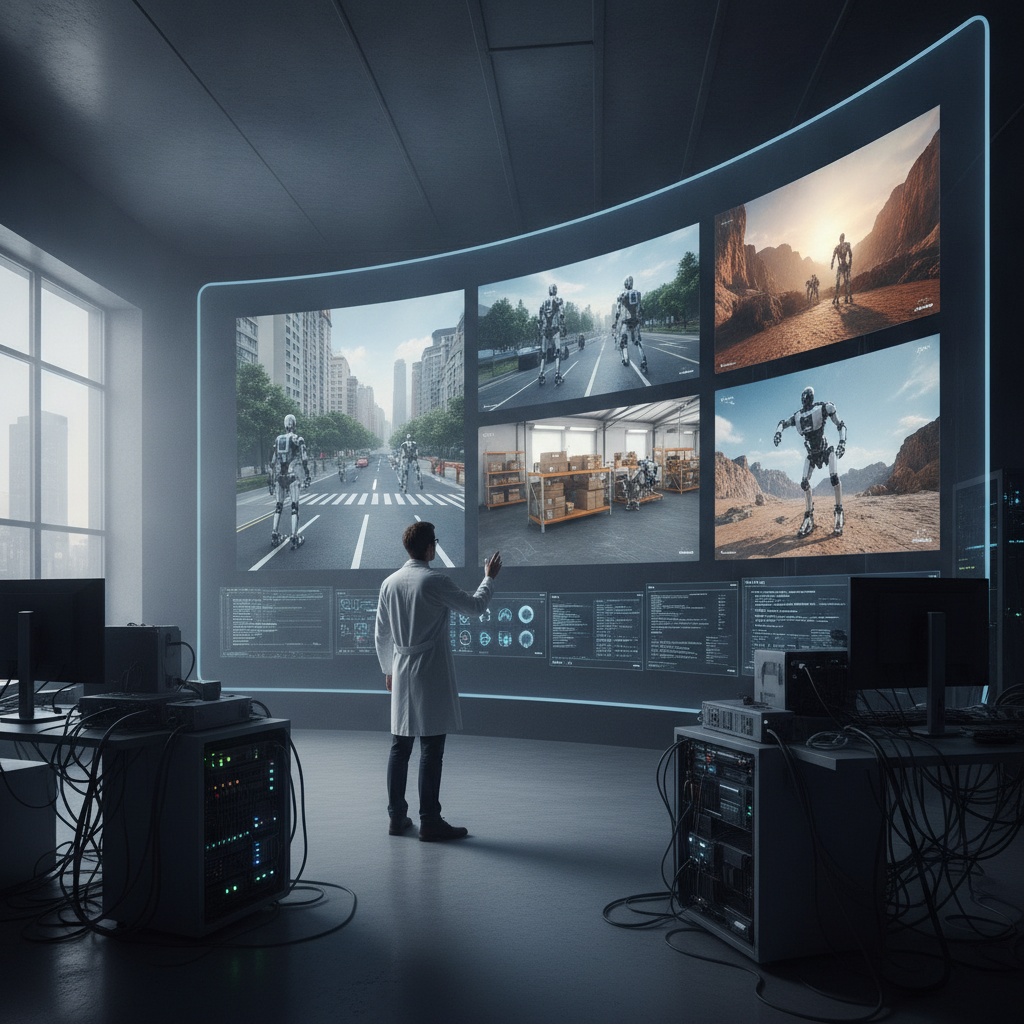
The high cost and extended timelines of training physical robots for industrial tasks have long been a barrier to widespread automation. A new approach leveraging hyper-realistic virtual worlds is gaining traction, allowing robots to learn complex tasks like grasping and moving objects in simulated environments before being deployed in the real world.
The Virtual Proving Ground
Platforms such as Vsim, developed by researchers at the Australian Centre for Robotic Vision, create detailed digital twins of environments like warehouses. Within these simulations, a robot can undergo accelerated training, condensing processes that might take a year of real-world operation into just a couple of days. This method eliminates the risk of damage to expensive hardware and allows for continuous, round-the-clock development cycles without the need for physical supervision.
Bridging the 'Reality Gap'
A primary challenge in this field is the 'reality gap'—the discrepancy between a simulated environment and the physical world. To overcome this, developers employ a technique called 'domain randomization.' By constantly altering variables in the simulation, such as lighting, object textures, and physics, the robot is forced to learn a more robust and adaptable set of skills. This helps ensure that the knowledge gained in the virtual world translates effectively to unpredictable real-world conditions.
From Competition to Commercial Application
The effectiveness of this training methodology was demonstrated at the Amazon Robotics Challenge, where a team using this approach won the 'stow' task. The success highlights the commercial potential for the logistics and manufacturing industries, where robots are tasked with repetitive pick-and-pack operations. The underlying technology also shows promise for more complex environments, with potential applications in sectors like agriculture for tasks such as automated fruit harvesting.
Future Outlook
As simulation technology becomes more sophisticated, its role in robotics development is set to expand. The ability to safely and cost-effectively train robots for a multitude of tasks promises to lower the barrier to entry for automation and accelerate its adoption across various industries. Closing the reality gap remains the central goal, paving the way for more intelligent and versatile robotic systems.